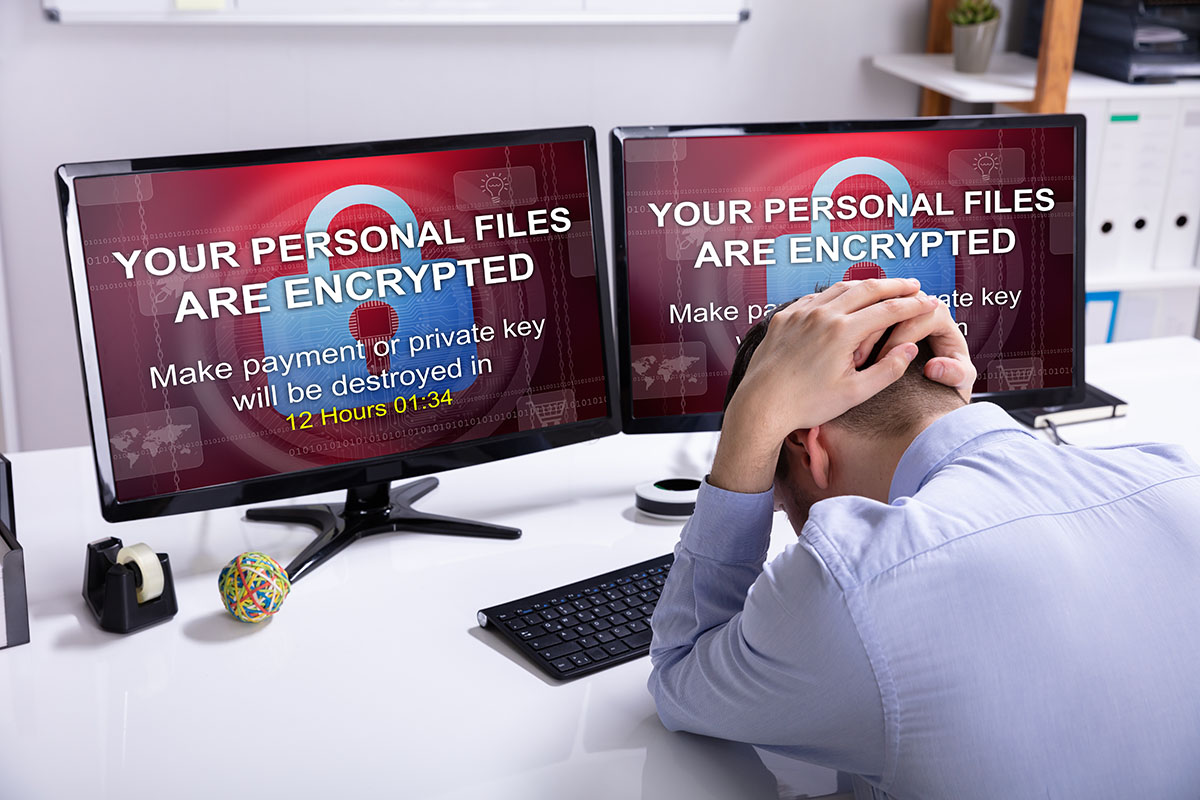
There’s a persistent myth in non-profit circles that ransomware gangs only go after big banks and national retail chains. A lot of board members and executive directors assume that because their organization exists to do good, criminals will look elsewhere. The opposite is closer to the truth. Leak sites run by ransomware operators routinely include hospitals, school districts, churches, and charities, exactly the kind of mission-driven groups people assume would be spared. Non-profits aren’t just getting caught in the crossfire here. For a lot of these crews, they’re the preferred target.
To a hacker, a non-profit often looks like the path of least resistance. These organizations sit on troves of sensitive donor data (names, addresses, sometimes credit card numbers that fall under PCI DSS rules) while running on budgets too thin to fund real cybersecurity. But the worst-case scenario for a non-profit isn’t a dead server or a lost afternoon of productivity. It’s reputational. Picture a donor who’s given $250 a year for the past decade getting a letter saying their card number may have been exposed; that relationship rarely survives a second letter like that. When someone hands over their banking details and home address to support your mission, they’re extending real trust, and a ransomware attack can shatter that trust in a single news cycle. Once that happens, the funding that keeps your programs running can disappear overnight. Protecting your endowment, and your organization’s future, starts with admitting that the old way of managing IT just isn’t built for this threat anymore.
The High Stakes of Donor Data
For most non-profits, the donor database is the crown jewel: names, home addresses, giving histories, and often banking or credit card numbers, all sitting in one place. On the dark web, that kind of bundle moves fast. Security researchers who track underground marketplaces have found that complete identity profiles (the kind that pair a name with a donation history and card details) can sell for several dollars apiece, while a bare email list goes for pennies. Criminals buy these lists to resell to other crews, or to build spear-phishing campaigns aimed squarely at your wealthiest, most loyal supporters, the people whose trust took years to earn.
Beyond the data itself, ransomware crews understand what security people call “reputation risk”: the simple fact that a non-profit cannot afford to have a breach become public. If a major foundation or a high-net-worth donor learns your organization got hit because you skipped basic protections like Multi-Factor Authentication (MFA) or encrypted, offline backups (the kind built on the old 3-2-1 rule: three copies, two formats, one off-site), they may quietly conclude your leadership is careless with their money. That perception hands attackers leverage, they know you’re desperate to keep the story out of the news, so they push the ransom number higher. It’s digital blackmail, plain and simple, aimed at the one thing your organization can least afford to lose: its credibility.
The Failure of the ‘Break-Fix’ Model for Non-Profits
A lot of non-profits still run on the hourly “break-fix” model: you keep a local technician on speed-dial and call them only after something has already gone wrong. It feels like the budget-friendly choice, but it quietly racks up security debt. Nobody’s watching the network at 2:00 a.m. on a Sunday. That happens to be exactly when a lot of ransomware gets launched; Verizon’s annual Data Breach Investigations Report has flagged nights, weekends, and holidays as prime attack windows for years.
And nobody’s making sure the patch Microsoft pushed out on this month’s “Patch Tuesday” actually gets installed on every single machine the same week it drops. Managed service providers solve this with remote monitoring platforms such as NinjaOne, Datto, or ConnectWise Automate. These tools patch and watch every endpoint around the clock, not just during business hours when the billable-hours meter happens to be running.
The break-fix model only switches on after something’s already broken, and for a non-profit, that’s already too late. By the time you’ve gotten your hourly IT contractor on the phone, the attacker has pulled your donor records and locked every file behind encryption. Now you’re staring at an impossible choice: drain part of your endowment to pay the ransom, or write off years of donor history and program records.
Coveware, which tracks ransomware payment trends quarterly, has reported average payouts for small organizations climbing into the tens of thousands of dollars, and that’s before you count the staff hours lost and the reputational hit with donors. This is what I’d call the “IT Extortion Loop”: you end up paying emergency rates to the very technician who had no financial reason to stop the breach before it happened.
How Flat-Rate Managed IT Aligns with Your Mission
Flat-rate Managed IT flips that whole arrangement around. Here, your provider, usually called a managed service provider, or MSP, charges one predictable fee every month, often priced per user and commonly landing somewhere in the $100-to-$250-per-seat range, to keep your systems patched, monitored, and running.
That one change moves the financial risk off your non-profit’s books and onto theirs. If your network gets breached or a server dies at 2 a.m. the night before a board meeting, the MSP has to throw its own staff and tools at the fix without billing you a penny more.
That flip in incentives matters more than it sounds. An MSP that loses money every time something breaks has every reason to obsess over prevention, which is why a good one already has layered security controls, automated nightly backups, and 24/7 monitoring running quietly before you ever notice a problem.
For your finance committee, that means real budget predictability: no surprise $5,000 emergency invoice landing in your inbox the week before your annual gala. IT spending turns into a fixed, forecastable line item that supports growth instead of derailing it at the worst possible moment.
The Power of IT Automation in Small Teams
Most non-profits run lean, a development director might double as the de facto “IT person,” and cybersecurity is nobody’s full-time job. That’s exactly the gap automation closes. Remote-monitoring platforms like NinjaOne, Datto, and ConnectWise Automate (the kind of tools MSPs run behind the scenes) handle the repetitive, unglamorous work that an overstretched staff tends to skip: pushing software patches overnight, flagging an antivirus definition that’s gone stale, or noticing that a laptop hasn’t checked in for its scheduled backup in a week.
Run daily, these systems scan the network for open vulnerabilities, confirm that every laptop’s hard drive is actually encrypted, and test backups against the old 3-2-1 rule, three copies of your data, on two different types of media, with one kept off-site, to make sure a restore would actually work if you ever needed one.
If someone tries logging into your donor database from, say, an unfamiliar address overseas at 3 a.m., the system can cut that connection in seconds, before a single file gets touched. The payoff for a non-profit: protection that looks a lot like what a much larger organization runs, without budgeting for a full-time, six-figure IT director. Automation becomes the force multiplier that lets a three-person ops team stay focused on the mission while the systems handle their own defense around the clock.
Strategic Consulting for Long-Term Protection
Tools alone don’t get you there, you also need someone thinking three to five years out, not just patching whatever broke this week. That’s the role of strategic IT consulting: looking at where the organization is headed and making sure the technology underneath can carry that weight.
Say you’re gearing up for a multi-year capital campaign that will process credit-card donations online, a good consultant checks that your donor portal meets PCI DSS requirements for handling payment data, and helps you build a real disaster recovery plan with defined recovery time and recovery point objectives, so everyone knows exactly how fast systems come back up and how much data, if any, you can afford to lose.
Cyber insurance is another spot where a consultant earns their fee. Most carriers won’t even write a policy anymore without proof that specific controls, multi-factor authentication, endpoint detection, encrypted offsite backups, are already in place, and if you can’t produce that documentation when you file a claim, the insurer can simply deny it.
A consultant from a firm like Sundance can walk you through exactly what your carrier requires, get those controls documented properly, and make sure that if ransomware does hit, your claim gets paid instead of bounced back on a technicality. That’s the second layer of protection for your endowment: one shield against the hackers themselves, and another against the legal and financial mess that follows a breach.
FAQs
Is managed IT really too expensive for a small non-profit?
Usually not, once you weigh it against the alternative. A single data breach, or even just a server crash that knocks out email in the middle of a fundraising push, typically costs more than a year of managed support, and that’s before counting the staff hours lost waiting for someone to fix it. Managed IT trades those unpredictable emergency bills for one flat monthly fee you can actually plan around. Many non-profits find that the boost in staff efficiency, fewer outages, faster help-desk response, covers the monthly cost on its own.
What’s the most common way hackers get into a non-profit’s network?
Almost always, it starts with a phishing email. Someone on staff clicks a link disguised as a vendor invoice or a donor inquiry, types in their password, and the attacker now has valid credentials, no malware required. Two things stop most of these attempts cold: Multi-Factor Authentication (MFA), so a stolen password alone isn’t enough to get in, and automated email filtering that catches the message before it ever lands in an inbox.
Does “flat-rate” really mean there are no surprise bills?
Yes, in a properly structured managed IT contract, the core maintenance, security monitoring, and support all sit under one monthly fee, so you can budget with 100 percent certainty about what IT will cost you. The surprise invoices people remember from the old days usually trace back to the hourly break-fix model, where the technician’s profit climbs every time your problems multiply, which gives them little real incentive to fix anything for good.
Can automation help us stay compliant with privacy laws and regulations?
It can, automation handles a lot of the unglamorous groundwork that compliance depends on. Many non-profits fall under regulations like HIPAA (if you touch any health-related client data) or state-specific data privacy statutes, and depending on how you process donations, payment card standards such as PCI DSS may apply too. Automated tools keep data encrypted at rest and in transit, log who accessed what and when, and make sure security patches go out on schedule, all baseline items auditors look for. That said, automation covers the technical side; it isn’t a substitute for a compliance attorney or your state’s nonprofit association confirming exactly which rules apply to your organization.
How exactly does managed IT help protect our endowment?
Mainly by keeping your money in your programs instead of in ransom payments or recovery bills. Recovery from a single ransomware incident at a small organization is commonly estimated to run into the tens of thousands of dollars once you add up forensic investigation, system rebuilding, and the staff hours lost during the outage, money pulled straight from work that should be serving your mission. Beyond the direct cost, a breach damages the one asset that keeps donations coming in: trust. Donors who believe their personal and financial information is safe keep giving; donors who read about a breach in the local paper often don’t. Protecting that trust is, in a very real sense, protecting your endowment’s long-term growth.
Trust Is the Foundation of Your Funding
IT isn’t a back-office line item you can keep deferring, it’s part of how you protect your organization’s reputation and its ability to keep raising money. Boards carry a fiduciary duty to safeguard the assets entrusted to them, and in 2026 that duty covers donor databases and financial systems just as much as it covers bank accounts and investment policy. Moving away from the old break-fix, pay-by-the-hour model toward flat-rate managed services and automation isn’t just a budgeting choice, it’s how you keep ransomware away from donor records, keep your staff doing real work instead of waiting on hold with a help desk, and keep the people who fund your mission confident that their information, and their money, are in good hands.
Sundance Networks builds its managed IT service around a simple observation: most non-profits run lean, often with one overworked staffer doubling as the de facto IT department. That’s exactly the gap ransomware crews look for: a single point of failure, an unpatched server, a donor database nobody’s backed up since the last gala. Our flat-rate plans bundle the pieces that actually stop attacks, patch management, multi-factor authentication, endpoint detection and response, and phishing-awareness training for staff, all billed at one predictable monthly rate instead of an hourly meter that starts running every time someone calls for help.