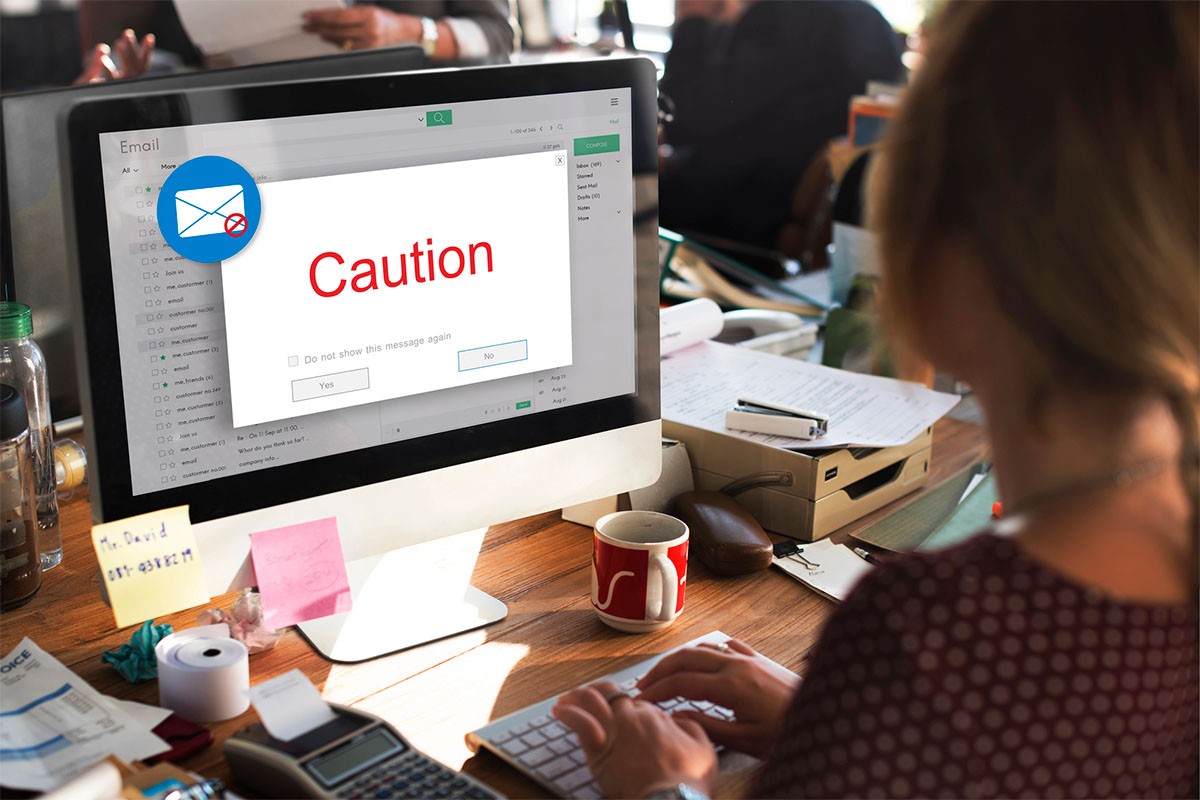
The end-of-year holiday season is an operational marathon for most businesses. Logistics get more complex, order volumes spike, and communication with shipping carriers becomes a constant, daily task. Your team’s inboxes are a perpetual stream of legitimate tracking numbers, delivery alerts, and shipment confirmations.
But within this flood of legitimate traffic lies a significant and growing threat. Cybercriminals view this period of high activity as a golden opportunity. They launch sophisticated phishing campaigns, impersonating trusted carriers like Amazon or USPS, with the singular goal of turning your operational hustle into their security loophole.
A single employee clicking on a fraudulent “delivery problem” link can do more than just compromise a password; it can bring your entire business to a grinding halt during its most critical season.
The Scammer’s Business Model
To effectively defend against these attacks, it’s important to understand the business rationale behind them. Cybercriminals are not just sending random emails; they’re executing a calculated strategy based on predictable human behavior and business patterns.
- Exploiting Urgency: The entire logistics industry runs on deadlines. A subject line like “Action Required: Shipment On Hold” is designed to trigger an immediate response. An employee trying to ensure a customer gets their package on time is psychologically primed to click first and ask questions later.
- Leveraging High Volume: When an employee processes dozens of real shipping emails an hour, “click fatigue” sets in. The brain defaults to pattern recognition, and a well-designed fake email that mimics the real thing can easily bypass scrutiny. The scam hides in the noise.
- Targeting the Human Firewall: Attackers know that while your technical firewalls may be strong, your human firewall is often the weakest link, especially when stressed and distracted by holiday workloads. They are not trying to break down the door; they are trying to trick someone into opening it for them.
The Domino Effect: From One Click to Total Disruption
It’s a mistake to view a phishing email as a minor threat. A successful attack triggers a chain reaction that can quickly escalate from a small security issue to a complete operational crisis.
- The Initial Breach: An employee clicks a malicious link. This action can either download malware directly onto their computer or lead them to a convincing but fake login page that harvests their network credentials.
- The Silent Intrusion: With stolen credentials or malware installed, the attacker gains a foothold in your network. They can now move laterally, escalate their privileges, and begin to map out your critical data systems, such as servers containing customer information or financial records.
- The Payload Delivery: Once they have access to what they want, the attacker executes their final plan. Most often, this involves deploying ransomware, a type of malware that encrypts all your essential files.
- The Operational Shutdown: Your business is now paralyzed. You cannot access customer orders, process payments, or manage inventory. Your operations are frozen, and you are presented with a ransom demand to get your data back.
During the busiest time of sales and foot/web traffic, this sequence of events is a business-ending catastrophe.
FAQs
What are the most common types of malware delivered by these scams?
Besides ransomware, which encrypts your files, these phishing emails often deliver spyware or keyloggers that silently record keystrokes to steal passwords and financial data. They can also install Trojans that create a “backdoor” into your network, giving attackers persistent access for future attacks.
Are executives or managers at a higher risk for these attacks?
Yes. Attacks that specifically target high-level individuals are known as “whaling.” Scammers target executives because their credentials often provide access to more sensitive company data and financial systems. An email appearing to be a critical shipping issue for a major client might be specifically crafted to target a manager or business owner.
Can’t we just rely on a good antivirus program to protect us?
A standard antivirus program is a necessary layer of defense, but it is not sufficient on its own. Modern attackers constantly change their malware signatures to evade basic detection. A comprehensive security strategy, known as “defense-in-depth,” uses multiple layers, including advanced email filtering, managed endpoint detection and response (EDR), and employee security training to create a much more resilient barrier.
How can I tell if a FedEx or UPS email is legitimate?
Legitimate carrier emails come from official domains like fedex.com or ups.com. Check the actual sender address, not just the display name, which can be faked. Real shipping notifications include specific tracking numbers you can verify by visiting the carrier website directly, not through email links. Authentic messages address you by name or reference account details, while phishing uses generic greetings. When uncertain, navigate directly to the carrier website and enter tracking numbers manually rather than clicking any email links.
What should employees do if they accidentally click a suspicious shipping link?
Immediately disconnect from the network by unplugging ethernet cables or disabling WiFi. This prevents potential malware from spreading to other systems. Report the incident to your IT department or managed service provider like Sundance Networks right away, even if nothing obviously happened. Change passwords for any accounts that might be affected, especially if you entered credentials on a suspicious page. An IT servicer can scan the device for malware and determine whether broader network compromise occurred.
Why do scams increase so dramatically during the holidays?
Holiday shopping creates exponentially more package shipments than normal periods, meaning employees expect frequent legitimate tracking notifications. This volume makes individual fraudulent messages less suspicious. Attackers also exploit holiday stress and distraction, knowing people are less careful when rushing. The universal nature of holiday shipping means scams apply to virtually every recipient without requiring targeted customization. Finally, reduced staffing during holiday periods may delay detection and response to successful attacks.
Can scams affect company networks beyond the individual who clicked?
Yes, shipping scam consequences often extend far beyond the initial victim. Malware delivered through phishing can spread laterally across networks, infecting additional systems. Stolen credentials may provide access to shared resources, cloud services, or administrative functions affecting the entire organization. Ransomware delivered through shipping scams has crippled entire companies from single employee clicks. This network-wide risk makes shipping scam protection an organizational priority, not merely an individual concern.
Are mobile devices safer from scam attacks than computers?
Mobile devices face equal or greater risk from shipping scams in some respects. Smaller screens make examining sender addresses and link destinations more difficult. Mobile email apps often hide full sender information by default. Users checking messages quickly on phones are less likely to scrutinize details carefully. Additionally, some mobile-specific attacks exploit differences in how phones handle links and downloads. Apply the same caution to shipping notifications on mobile devices as you would on desktop computers.
Building a Defense That Withstands the Holiday Rush
You cannot afford to gamble your business operations on the hope that no one will ever make a mistake. A realistic security strategy acknowledges that human error is inevitable and builds a technical safety net to mitigate the damage when it happens.
Sundance provides the multi-layered security solutions that protect your business from the inside out. We deploy advanced email security to block the vast majority of threats from ever reaching your team, combined with powerful endpoint protection to neutralize malware if a click does occur. This proactive and professionally managed approach allows your team to work efficiently without fear, secure in the knowledge that a robust defense is in place.
Do not let a holiday scam derail your success or one of the best seasons for business. Let us help you fortify your defenses so you can focus on what you do best: running your company.